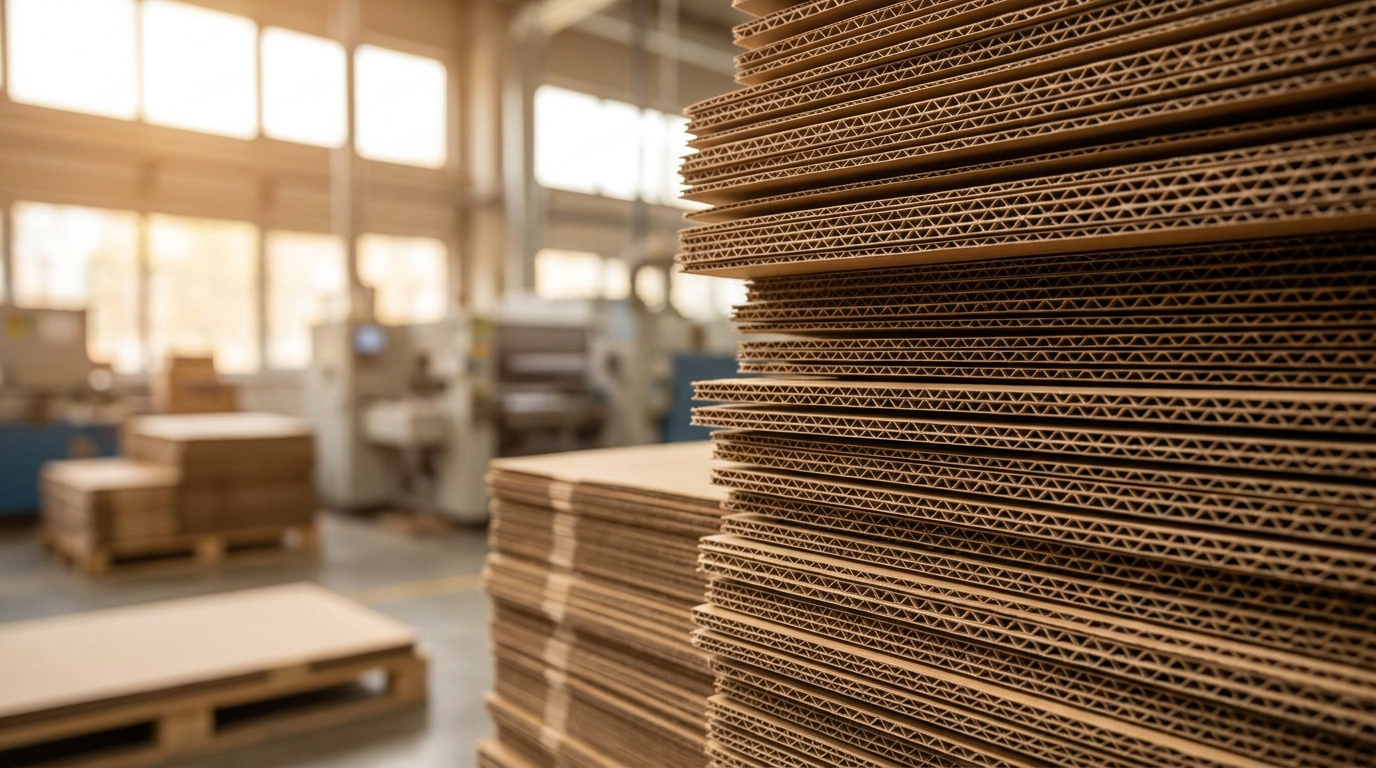
Corrugated Box Paper: Fluting, Liner, and Strength
Corrugated board is the backbone of global shipping — strong, light, and recyclable. But behind the familiar brown box lies an engineered structure of liner and fluting whose design determines how much weight a box can carry and how well it protects its contents. Understanding the basics of corrugated board helps buyers specify the right box and avoid both failures and overspending. This guide explains liner, fluting, flute profiles, and how they combine to create strength.
- Corrugated board combines flat liners with a wavy fluting layer
- Fluting gives cushioning and stacking strength; liners give surface strength
- Flute profiles (A, B, C, E) suit different products and printing
- Single, double, and triple wall offer increasing strength
- Right specification balances protection, weight, and cost
How corrugated board is built
Corrugated board is made by gluing a wavy layer of paper, called fluting or medium, between one or more flat sheets called liners. This simple sandwich is what gives the board its strength-to-weight advantage: the arches of the flutes resist crushing and absorb shock, while the liners hold the structure rigid and provide a printable surface. The result is a material that is light yet remarkably strong, easy to fold into boxes, and fully recyclable — which is why it dominates transport packaging worldwide.
The roles of liner and fluting
Liner and fluting do different jobs, and both affect performance. The liner forms the outer and inner faces; a stronger or heavier liner improves bursting strength and the surface available for printing. The fluting in the middle provides cushioning and contributes to stacking (compression) strength as well as rigidity. The combination of liner grade, fluting grade, and flute profile determines how the finished board performs. Engineering a box well means balancing these elements rather than simply choosing the heaviest of each.
Flute profiles explained
Flutes come in standard profiles that differ in height and number per metre, each suited to different needs:
- A-flute — tall flutes, excellent cushioning and stacking strength.
- C-flute — a versatile all-rounder, the most common for shipping boxes.
- B-flute — shorter flutes, good for printing and crush resistance.
- E-flute — fine flutes, thin board with a smooth surface for retail packaging.
Single, double, and triple wall
Corrugated board is also classified by how many layers of fluting it contains. Single-wall board — one fluting between two liners — is the most common and suits the majority of products. Double-wall board uses two fluting layers and three liners for heavier or more demanding goods, offering greater stacking strength and protection. Triple-wall board is reserved for very heavy industrial loads, sometimes replacing wooden crates. Choosing the wall type is mainly about the weight to be carried and the stacking and handling the box will face in transit and storage.
Specifying for strength without overspending
The art of box specification is matching strength to the real demands of the product and supply chain. Over-specify, and you pay for material and shipping weight you do not need; under-specify, and boxes fail, damaging goods and reputation. The two common strength measures are bursting strength (resistance to puncture) and edge-crush (stacking) strength. Rather than choosing components in isolation, describe to your supplier the product weight, how high boxes will be stacked, the transport conditions, and any printing needs. The supplier can then engineer the optimal combination of liner, fluting, flute profile, and wall type to meet those demands at the lowest sensible cost.
Frequently Asked Questions
Which flute profile should I choose?
C-flute is the versatile default for most shipping boxes. A-flute gives more cushioning and stacking strength, B-flute resists crushing and prints well, and E-flute suits thin, smooth retail packaging. The best choice depends on your product and printing.
When do I need double-wall board?
Double-wall board suits heavier products, taller stacking, or more demanding transport where single-wall is not strong enough. Your supplier can advise based on weight and handling conditions.
What is the difference between bursting strength and edge-crush?
Bursting strength measures resistance to puncture and pressure on the board face. Edge-crush measures stacking strength — how much compression the board edge withstands. Both matter for different aspects of box performance.
Looking to import Indonesian paper or paperboard? Contact our export team for a quote and specifications.
Contact Us