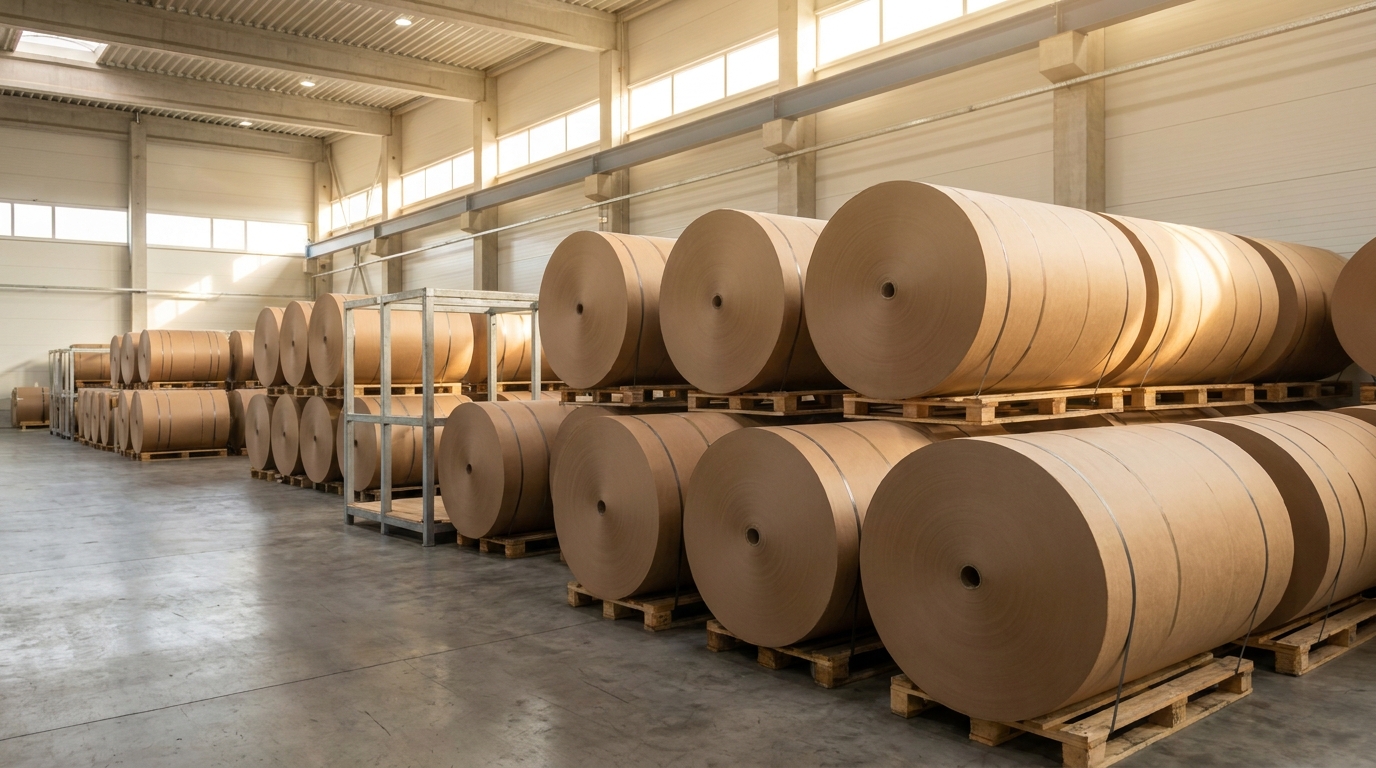
Indonesian Kraft Paper: A Complete Buyer's Guide for Importers
Kraft paper is one of the most widely traded packaging papers in the world, prized for its strength, versatility, and recyclability. Indonesia has become a competitive source of kraft paper for the packaging and corrugated industries thanks to its growing pulp and paper sector. For importers, knowing how kraft paper is graded, what specifications matter, and how to evaluate a supplier is essential to sourcing the right product at a fair price. This guide walks you through everything you need to know before placing your first order of Indonesian kraft paper.
- Kraft paper is a strong, recyclable packaging paper made from kraft pulp
- Key specs: GSM (grammage), Cobb value, bursting strength, and tensile strength
- Used for liners, sacks, wrapping, and corrugated boxes
- Available in virgin (brown/natural) and recycled grades
- A reliable supplier delivers consistent specs and proper documentation
What is kraft paper?
Kraft paper is produced from kraft pulp — wood fibre cooked using the kraft (sulfate) process, which preserves fibre length and gives the paper its characteristic strength. The natural, unbleached version has a familiar brown colour and is among the most durable papers available, which is why it dominates packaging applications. Indonesia's paper mills produce kraft paper in a range of grammages and grades, serving both domestic converters and a growing export market. Because kraft paper is made largely from renewable wood fibre and is easily recycled, it has also become central to the global shift away from plastic packaging.
Main uses of kraft paper
Kraft paper is remarkably versatile, and understanding the main applications helps you specify the grade you need:
- Corrugated packaging — as liner and fluting in cardboard boxes.
- Paper sacks and bags — for cement, flour, and other heavy goods.
- Wrapping and protective packaging — for industrial and retail goods.
- Void fill and interleaving — protecting products during shipping.
Key specifications to check
Quality kraft paper is defined by measurable specifications, and reputable suppliers provide a technical data sheet for each grade. The most important parameters are grammage (GSM), which determines weight and thickness; the Cobb value, which measures water absorption; bursting strength, which indicates how much pressure the paper withstands before rupturing; and tensile strength. Buyers in humid markets should pay particular attention to the Cobb value and any sizing treatment. Always agree on the target specifications in writing before ordering.
Grades and grammage ranges
Kraft paper comes in a spectrum of grades to match different uses, and choosing correctly avoids paying for more strength than you need. The right grade depends on what you are packaging and the conditions it will face:
- Light grammages (around 70–100 GSM) for wrapping and bags.
- Medium grammages (110–150 GSM) for liners and general packaging.
- Heavier grammages (180–300+ GSM) for high-strength liners and boards.
- Virgin kraft for maximum strength; recycled kraft for cost and sustainability.
How to evaluate a kraft paper supplier
Choosing the right supplier is as important as the specifications themselves. A trustworthy supplier delivers consistency, documentation, and clear communication rather than just a low price. When you shortlist a supplier, assess these points carefully: consistent grammage and strength matching the agreed data sheet on every shipment; the ability to provide samples before bulk orders; experience handling roll and ream export with proper packing; and transparent documentation and references in your market. A supplier who can reproduce the same specifications order after order saves you costly production problems downstream.
Pricing and what affects it
Kraft paper prices move with several factors, so comparing offers by headline price alone can be misleading. Pulp and recovered-paper costs are the biggest drivers, followed by grammage and grade — heavier and virgin grades cost more per tonne. Roll width, packing, and the shipping method also affect the landed price, as do global demand and energy costs. The most reliable way to compare suppliers is to standardize the specification and roll format first, then request quotes against it on the same Incoterms so you are comparing like for like.
Packaging, shipping, and logistics
Kraft paper is usually shipped as reels (rolls) or sheets, palletized and wrapped to protect against moisture and edge damage. Clarify Incoterms such as FOB or CIF early so both parties know who arranges freight and insurance. Confirm the documents you will receive — commercial invoice, packing list, bill of lading, certificate of origin, and the technical data sheet or mill certificate. Because paper is sensitive to humidity, discuss moisture-barrier packing and container handling with your supplier to keep the product in specification on arrival.
Frequently Asked Questions
What is the difference between virgin and recycled kraft paper?
Virgin kraft is made from fresh wood pulp and offers the highest strength and a cleaner, more uniform appearance. Recycled kraft uses recovered fibre, lowering cost and environmental impact but with slightly lower strength. The right choice depends on your application and budget.
What grammage of kraft paper do I need?
It depends on the use. Wrapping and bags often use 70–100 GSM, general liners 110–150 GSM, and high-strength liners or boards 180 GSM and above. Share your application with the supplier and they can recommend a grade.
Can you supply kraft paper for export?
Yes. We supply kraft paper in reels and sheets for export, with consistent specifications and full documentation. Contact us with your grammage, dimensions, and volume for a quote.
Looking to import Indonesian paper or paperboard? Contact our export team for a quote and specifications.
Contact Us