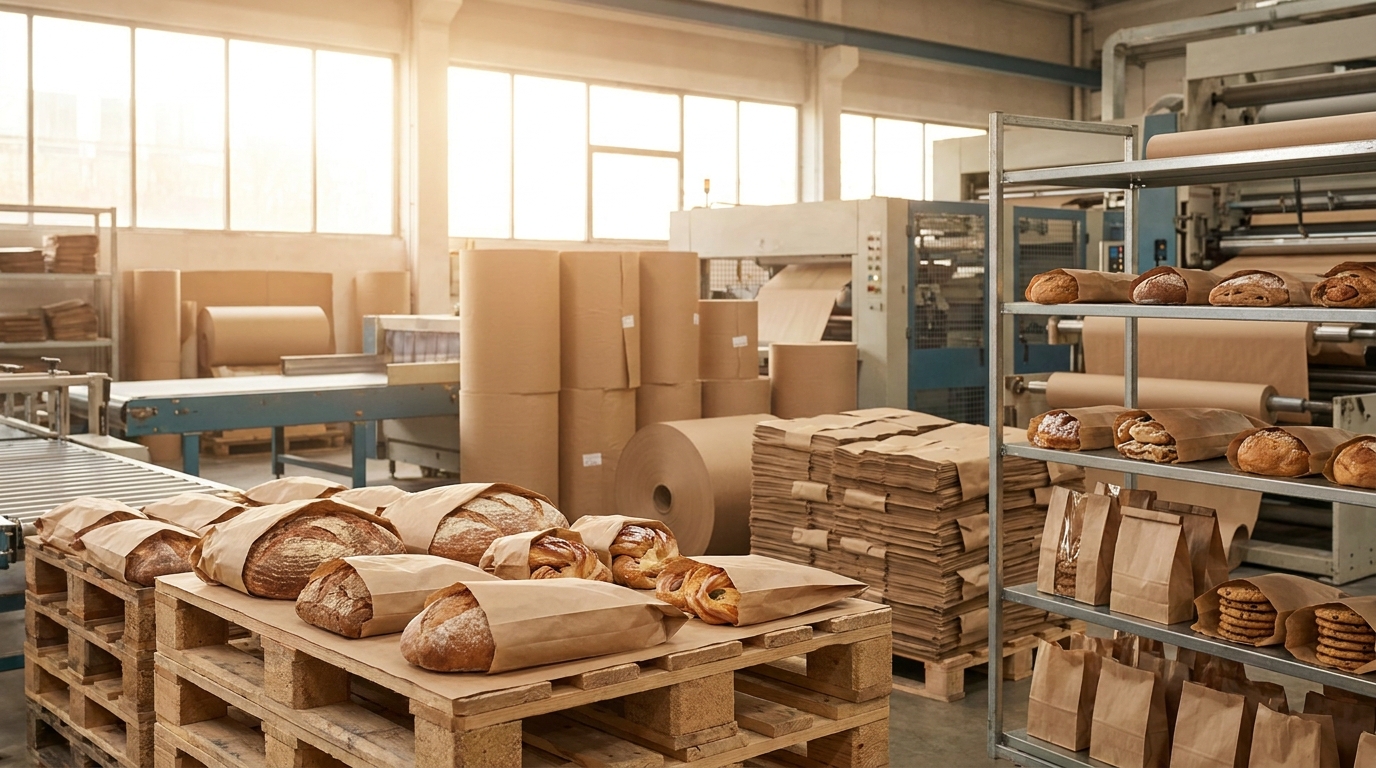
Food-Grade Paper: Standards and Uses Explained
As brands and regulators push to replace plastic, food-grade paper has become a fast-growing category — used for everything from food wraps and bags to cups, boxes, and bakery liners. But not all paper is safe for direct food contact. Food-grade paper must meet specific safety standards covering the fibre, any coatings, and the inks and additives used. This guide explains what food-grade paper is, the standards behind it, and what to check before sourcing it.
- Food-grade paper is certified safe for direct contact with food
- Safety covers fibre, coatings, inks, and additives
- Used for wraps, bags, cups, boxes, and bakery liners
- Often uses virgin fibre for purity and may have grease-resistant treatment
- Importers should request food-contact compliance documentation
What makes paper 'food-grade'?
Food-grade paper is paper that has been manufactured and certified to be safe for direct contact with food. This is more than just clean paper: it means the raw fibre, any coatings or barriers, and the inks and additives have all been assessed so that nothing harmful can migrate into the food. Because food contact is a safety matter, food-grade paper is governed by regulations and standards that suppliers must be able to demonstrate compliance with. For buyers, the key point is that 'food-grade' is a documented, verifiable property — not a marketing word.
The standards behind food-contact paper
Different markets have their own food-contact regulations, but they share common principles. The fibre must be suitably pure, often favouring virgin fibre to avoid contaminants that can be present in some recovered streams. Any coating used to add grease or moisture resistance must itself be food-safe. Inks and additives must be approved for food contact and kept away from the food-facing surface where required. Reputable suppliers provide documentation — such as a declaration of compliance or migration test results — confirming the paper meets the relevant standard for the intended food type and use.
Common types and uses
Food-grade paper comes in several forms tailored to different foods and formats:
- Wrapping paper — for sandwiches, burgers, and bakery items.
- Paper bags — for bread, snacks, and takeaway.
- Cup and board stock — for cups, trays, and food boxes.
- Greaseproof and baking paper — resistant to oil and heat.
Coatings and barriers
Many foods are greasy or moist, so food-grade paper often needs a barrier to perform. Traditionally this was done with plastic (PE) coatings, but these can complicate recycling. Increasingly, suppliers offer water-based or bio-based barrier coatings that provide grease and moisture resistance while keeping the paper more recyclable. When sourcing, clarify what barrier your product needs — for example, grease resistance for fried foods or moisture resistance for chilled items — and ask whether a recyclable barrier option is available. The right barrier balances food protection with end-of-life recyclability.
What importers should check
Before sourcing food-grade paper, importers should verify a few essentials to avoid compliance problems. Confirm that the supplier can provide food-contact compliance documentation valid for your market and food type. Check the fibre source and whether virgin fibre is used where purity matters. Clarify the barrier or coating and its recyclability. Request a sample to confirm performance with your actual product, and agree on specifications and certification per shipment. Taking these steps protects both your customers and your brand, and ensures the paper will clear customs and satisfy your local food-safety authorities.
Frequently Asked Questions
Can recycled paper be food-grade?
Sometimes, but food contact often favours virgin fibre because recovered fibre can carry contaminants. Recycled fibre may be used for the outer layers with a food-safe barrier or virgin layer facing the food. Always confirm compliance documentation.
Is all brown kraft paper safe for food?
No. Only kraft paper that is specifically manufactured and certified for food contact is safe for direct food use. Ask the supplier for food-grade certification rather than assuming.
What documentation should I request for food-grade paper?
Request a declaration of compliance or food-contact certification valid for your market, plus details of the fibre, coating, and inks. Migration test results provide additional assurance.
Looking to import Indonesian paper or paperboard? Contact our export team for a quote and specifications.
Contact Us