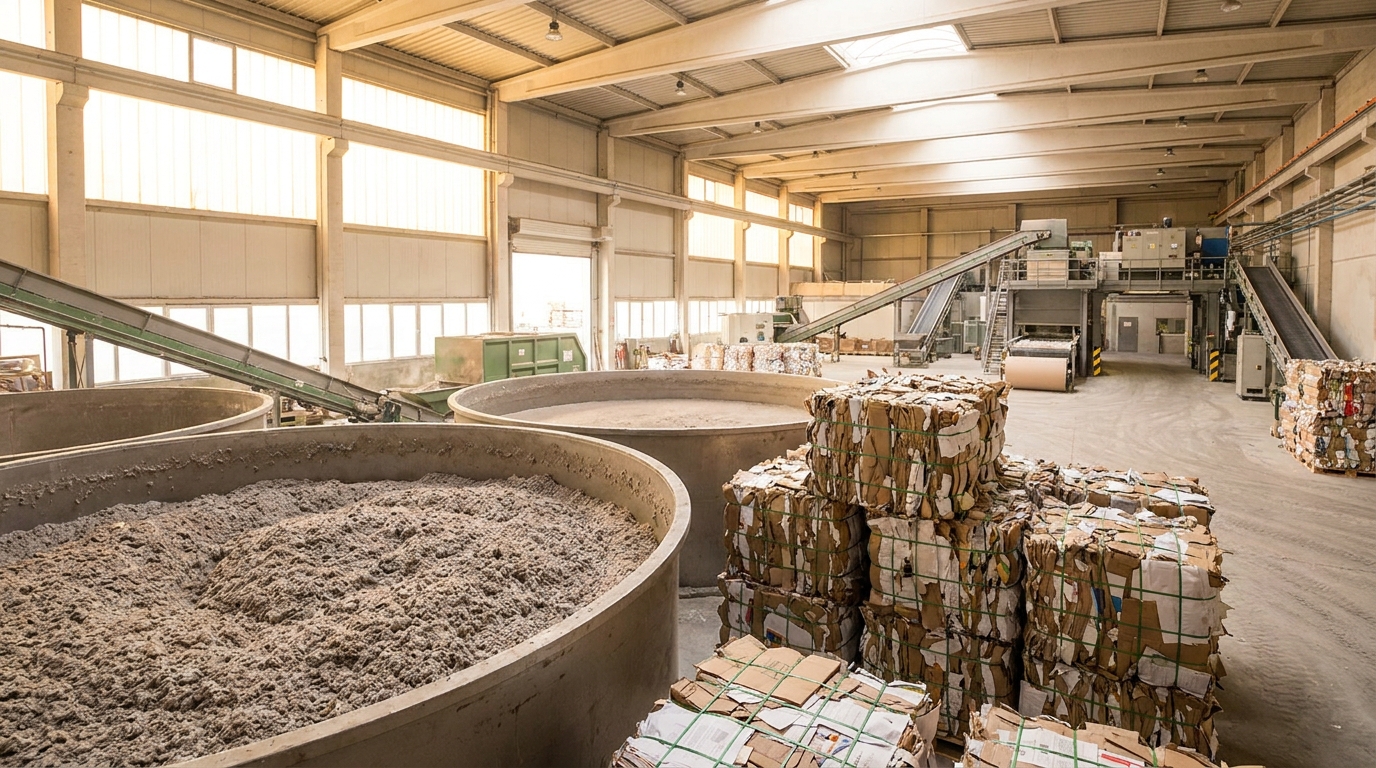
Recycled Paper and Sustainability in Packaging
Sustainability has moved to the centre of packaging decisions, and recycled paper is one of the most practical ways brands reduce their environmental footprint. Made from recovered fibre rather than fresh wood pulp, recycled paper conserves resources and diverts waste from landfill while remaining strong enough for most packaging. But recycled content comes with trade-offs that buyers should understand. This guide explains recycled paper, its benefits and limits, and how to source it responsibly.
- Recycled paper is made from recovered (post-consumer or pre-consumer) fibre
- It conserves wood, water, and energy and reduces landfill waste
- Most packaging papers can include high recycled content
- Recycled grades are usually more economical than virgin grades
- Paper is recyclable multiple times, supporting a circular economy
What is recycled paper?
Recycled paper is produced from recovered fibre — paper and board that has been used and collected for reprocessing. This recovered material is pulped, cleaned, and reformed into new paper. Recovered fibre is often described as post-consumer (collected after use by households and businesses) or pre-consumer (mill and converter offcuts). Many packaging papers, including testliner and recycled kraft, are made largely or entirely from recovered fibre, which is why packaging is one of the great success stories of recycling.
Environmental benefits
Using recovered fibre instead of fresh wood pulp delivers several environmental advantages that matter to brands and consumers alike:
- Conserves wood by reusing fibre already in circulation.
- Typically uses less water and energy than virgin production.
- Diverts paper waste from landfill and incineration.
- Supports a circular economy where fibre is reused multiple times.
Understanding the limits of recycled fibre
Recycled paper is not without trade-offs, and understanding them helps you specify realistically. Each time fibre is recycled, it shortens slightly, which can reduce strength compared with virgin fibre — this is why high-strength or food-contact applications sometimes still require virgin content. Recycled grades may also have a greyer or less uniform appearance. For many packaging uses these differences are unimportant, but for premium print or maximum strength they can matter. The practical answer is to match the recycled content to the application rather than maximizing it everywhere.
Recycled content and recyclability are not the same
Two sustainability ideas are easy to confuse: recycled content and recyclability. Recycled content is how much recovered fibre went into making the paper. Recyclability is whether the paper can be recycled again after use. A package can be high in one and low in the other. The good news is that most paper packaging scores well on recyclability — plain paper and board are widely accepted in recycling streams. Problems arise mainly when paper is combined with plastic coatings or laminates that complicate recycling, so designing for recyclability means keeping packaging as close to pure paper as possible.
How to source recycled paper responsibly
Sourcing recycled paper responsibly means looking beyond a single label. Ask suppliers for the actual recycled content percentage and whether it is post- or pre-consumer. Confirm that the grade still meets your strength and food-safety requirements. Where credible certification is available, it can provide additional assurance about responsible fibre sourcing. Finally, consider the whole package: choosing a recyclable, mono-material paper design often does more for sustainability than chasing the highest recycled percentage on one component. A good supplier can help you balance recycled content, performance, and recyclability for your specific product.
Frequently Asked Questions
Is recycled paper weaker than virgin paper?
Slightly, because recycling shortens fibres over time. For most packaging this is not a problem, but applications needing maximum strength or food contact may require some virgin content. Match the grade to the use.
How many times can paper be recycled?
Paper fibre can typically be recycled several times before it becomes too short to reuse. Adding some fresh fibre into the cycle keeps the overall fibre stream strong.
Does recycled content make paper less recyclable?
No. Recycled content and recyclability are separate. Plain recycled paper and board remain widely recyclable. What harms recyclability is plastic coatings or laminates, not the recycled fibre itself.
Looking to import Indonesian paper or paperboard? Contact our export team for a quote and specifications.
Contact Us